






Key Takeaways
- $180K in software waste eliminated. 50x ROI.
- Avoided unnecessary hiring – Capacity data showed they had bandwidth.
- Flying blind on remote productivity is expensive. CurrentWare fixed that.
- Light-touch monitoring instead of surveillance. Culture intact.
Overview
A fast growing independent insurance agency based in the United States, with a distributed workforce of over 70 employees, faced a critical challenge as it scaled:
How do you manage productivity, hiring, and costs when most of your workforce operates remotely without complete visibility?
For the organization’s Director of Operations, the answer became clear: without data, every decision was based on assumptions.
“There was no true way for me to manage the number of people that we have on our team without having some kind of data.”
The Challenge
Growth Without Visibility
Rapid expansion created operational complexity. While existing systems provided partial insights, they failed to capture the full picture of employee activity and productivity.
“It does not give me a full picture… there’s never been a true way to measure any of that for our staff.”
This lack of visibility led to three critical issues:
- Inaccurate productivity signals
- Uncertainty around employee utilization
- Pressure to hire without clear justification
The Illusion of Busyness
Like many organizations, the company relied on self reported activity and limited system logs.
“Everybody’s the busiest person in our office when you ask them… but it doesn’t look like they’re busy.”
Without objective data, leadership couldn’t distinguish between:
- Actual productive work
- Idle or untracked time
- Work happening outside core systems
Rising Costs and Hiring Pressure
As the business grew, there was increasing pressure to expand the support team. However, leadership suspected inefficiencies.
“I knew we were losing money… in terms of time with our team members.”
Hiring more employees without understanding existing capacity risked increasing costs without improving output.
The Solution
Choosing Visibility Over Assumptions
After evaluating multiple platforms, the organization selected CurrentWare based on cost effectiveness and capability.
“It came down to CurrentWare and another platform… but the cost was substantially higher.”
“I knew I was getting what I needed… at less than half the cost.”
The team implemented workforce analytics to gain insight into:
- Application and web usage
- Time utilization patterns
- Productivity trends
- Activity outside core systems
A Practical, Culture First Approach
The organization adopted a balanced approach focused on insights not surveillance.
“We’re trying to put controls in place without impacting the culture.”
“It’s not something I hover over all day… I only use it when I need real answers.”
The Results
Data Backed Workforce Visibility
For the first time, leadership could combine system data with real activity insights.
“Now I can put both reports together and it gives me a much better picture of what’s truly happening.”
This enabled:
- Clear productivity benchmarking
- Better performance conversations
- Real-time operational insights
Smarter Hiring Decisions
With visibility into actual capacity, unnecessary hiring was avoided.
“We do not need to hire another support team member… I’ve got people that have more than enough capacity.”
“It really helped me justify not having to constantly hire people.”
Leadership could now:
- Optimize the existing workforce
- Delay hiring until necessary
- Improve labor cost efficiency
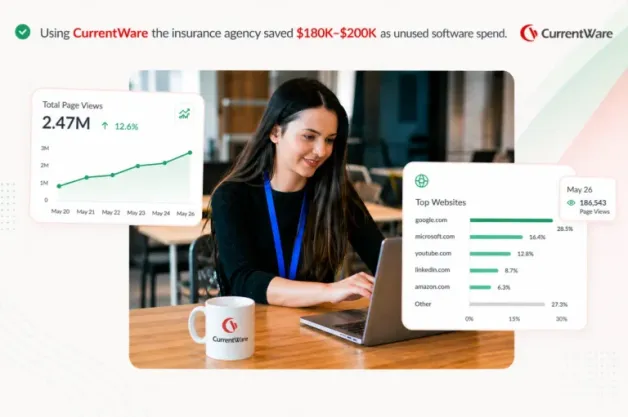
$180,000-$200,000 in Software Waste Identified
One of the most immediate impacts was uncovering unused software spend.
“That’s a lot of money going out the door every single year.”
“If we do not see better utilization… it needs to go because it’s costing us upwards of $200,000.”
Turning Insight into Measurable ROI
The financial impact became clear when a major source of wasted software spend was identified.
“It is costing us about $180,000 a year… and nobody uses it.”
Compared to the annual investment, this single insight delivered a 50x return on investment.
“That covers more than our subscription… it’s a pretty big deal.”
Impact
- Immediate visibility into unused licenses
- Clear action plan to eliminate waste
- Savings exceeding platform cost by more than 50x
From Visibility to Financial Planning
Beyond immediate savings, workforce data is now used as a strategic planning tool.
“I’m going to be able to use this data… to help with our budgeting for the coming years.”
Leadership now uses insights to:
- Present evidence-backed recommendations
- Support financial and operational decisions
- Align with executive stakeholders, including finance leadership
Stronger Operational Confidence
A major shift has been the ability to present credible, data-backed insights.
“It makes me feel more confident in what I’m putting in front of leadership.”
“We can narrow it down to the date, the time, and the website… what’s happening.”
Leadership can now:
- Validate assumptions with data
- Respond to issues quickly
- Align hiring, budgeting, and operations
- Conduct fairer performance evaluations
Implementation Experience
Despite being new to workforce visibility tools, implementation was straightforward.
“There was a little bit of backend work… but once everything was set up, it’s been great.”
“Everybody’s been very helpful… no complaints at all.”
Conclusion
The platform didn’t just provide visibility, it transformed how decisions are made. From uncovering hidden inefficiencies to preventing unnecessary hiring and identifying nearly $200K in wasted spend, leadership moved from intuition to evidence.
“We had no true way to measure productivity before… now we actually understand what’s happening.”


